



A daily routine chart for kids helps children understand what comes next, practice everyday responsibilities, and gradually manage more of their day. A predictable routine can also make transitions easier and reduce repeated reminders. The most useful chart fits your child’s abilities, school schedule, and family life while leaving room for rest, play, and choice.
Why a Daily Routine Matters for Children
Predictable routines can help children feel secure. When they know what happens after breakfast or before bed, everyday expectations become clearer. Small responsibilities—such as putting clothes in a hamper or preparing a school bag—also give children opportunities to contribute and experience success. With patient teaching, these repeated actions can support growing independence and confidence.
Following a familiar sequence gives children opportunities to practice planning, remembering steps, and checking their work. A visual routine chart provides support while these skills are developing. Needing pictures, reminders, or adult help is normal; independence grows through practice, not through expecting children to manage everything alone.
How to Create a Daily Routine Chart That Fits Your Child
- Start with fixed commitments. Add school, travel, childcare, appointments, and family responsibilities before planning optional activities.
- Protect sleep. Work backward from wake-up time and allow time to settle. Children ages 3–5 generally need 10–13 hours of sleep in 24 hours, including naps; ages 6–12 need 9–12 hours.
- Match tasks to ability. Separate what your child can do alone, what needs help, and what an adult must handle. Use specific actions such as “Put your folder in your bag” instead of “Be organized.”
- Consider energy and hunger. After school, your child may need a snack, movement, quiet time, or connection before homework. Choose the order that works best for them.
- Use times selectively. Give school departure and bedtime clear times. For flexible activities, a simple sequence—snack, play, school tasks—may work better.
- Leave breathing room. Include time for transitions and unexpected delays. If the day only works when everything goes perfectly, simplify it.
- Plan together. Let your child choose between suitable activities or help decide their order. Keep essential boundaries while offering meaningful choices.
What Should a Kids’ Daily Schedule Include?
- Personal care: getting dressed, washing hands, and brushing teeth with appropriate help.
- Meals and snacks: timing that fits school, appetite, and family circumstances.
- School and travel: include transportation and childcare.
- Learning: assigned homework or suitable reading, with breaks when needed.
- Movement: active play and accessible physical activities.
- Free time: space for interests, creativity, friends, and rest.
- Family connection: conversation, a shared meal, a story, or another familiar ritual.
- A small responsibility: putting toys away, setting the table, or checking a school bag.
- Bedtime preparation: a calm, predictable sequence that allows enough sleep.
Not every item needs its own box. Combine familiar steps and highlight the ones your child is learning. Movement should happen across the day: the CDC recommends that ages 3–5 stay active throughout the day, while ages 6–17 need at least 60 minutes of moderate-to-vigorous activity daily. School activity can contribute to that total.
Make the Routine Chart easy to follow
For preschoolers, use clear pictures and short morning, afternoon, and evening sequences. Early elementary children may prefer pictures with checkboxes. Older children can help create a written checklist and organize flexible activity blocks. Choose the format that helps your child understand and act, regardless of age.
- Introduce one routine first, such as the morning routine or bedtime routine.
- Demonstrate unfamiliar tasks and practice together when nobody is rushed.
- Keep supplies within reach and place the chart where the tasks happen.
- Notice specific progress: “You checked your bag and remembered your folder.”
- Review difficult steps. They may need clearer instructions, more time, or adult support.
- Explain changes calmly and show what will happen instead.
Adapt the Schedule to Your Family’s Real Life
A routine should work with your circumstances. If your child attends after-school care, focus the home chart on mornings and evenings. For afternoon school, move suitable activities earlier and allow recovery time afterward. Across different caregivers or homes, familiar sequences can provide continuity even when times change. Children with additional developmental, sensory, or physical needs may benefit from fewer steps, photographs, or individualized support.
3 Daily Routine Examples for Different Ages
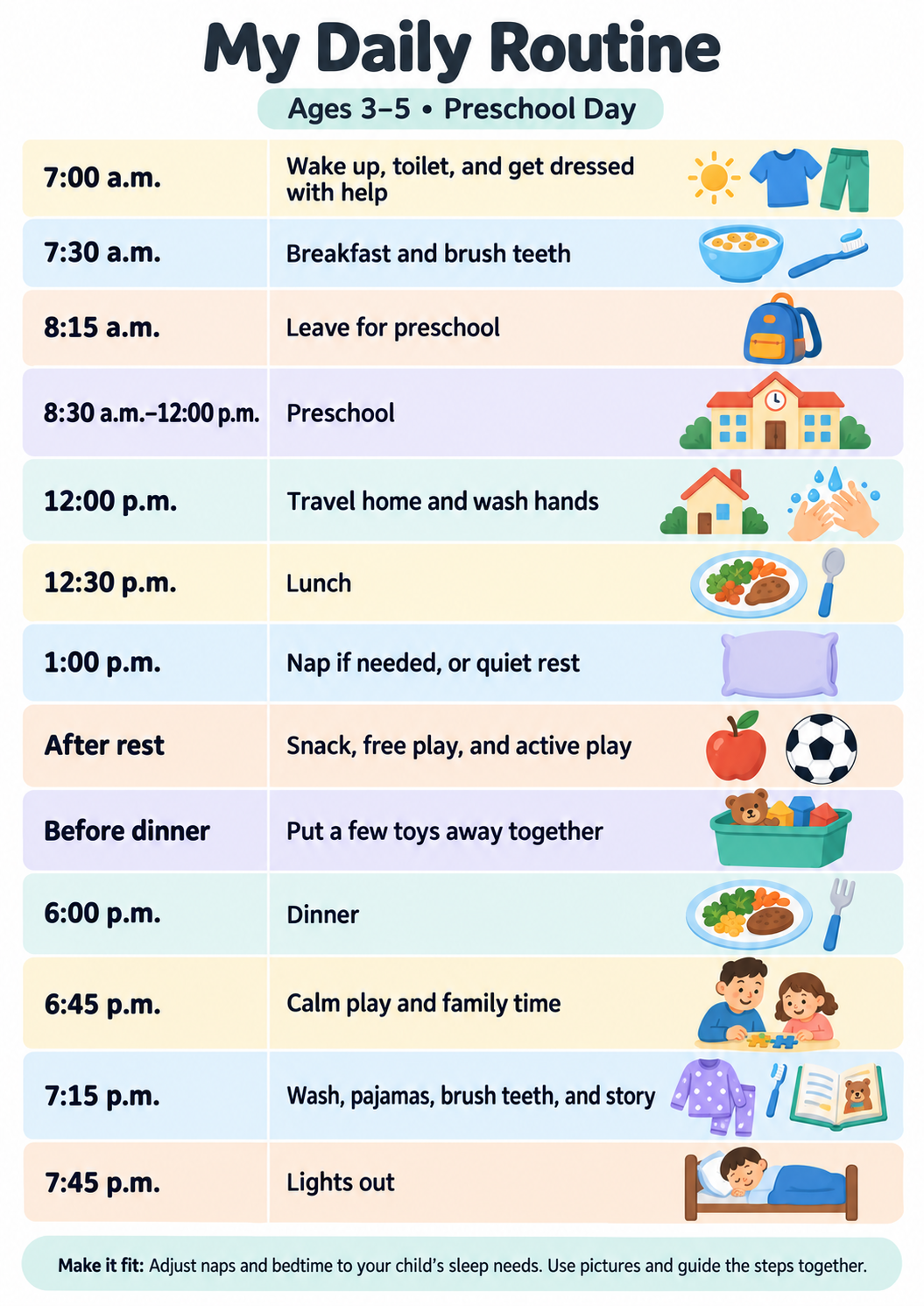
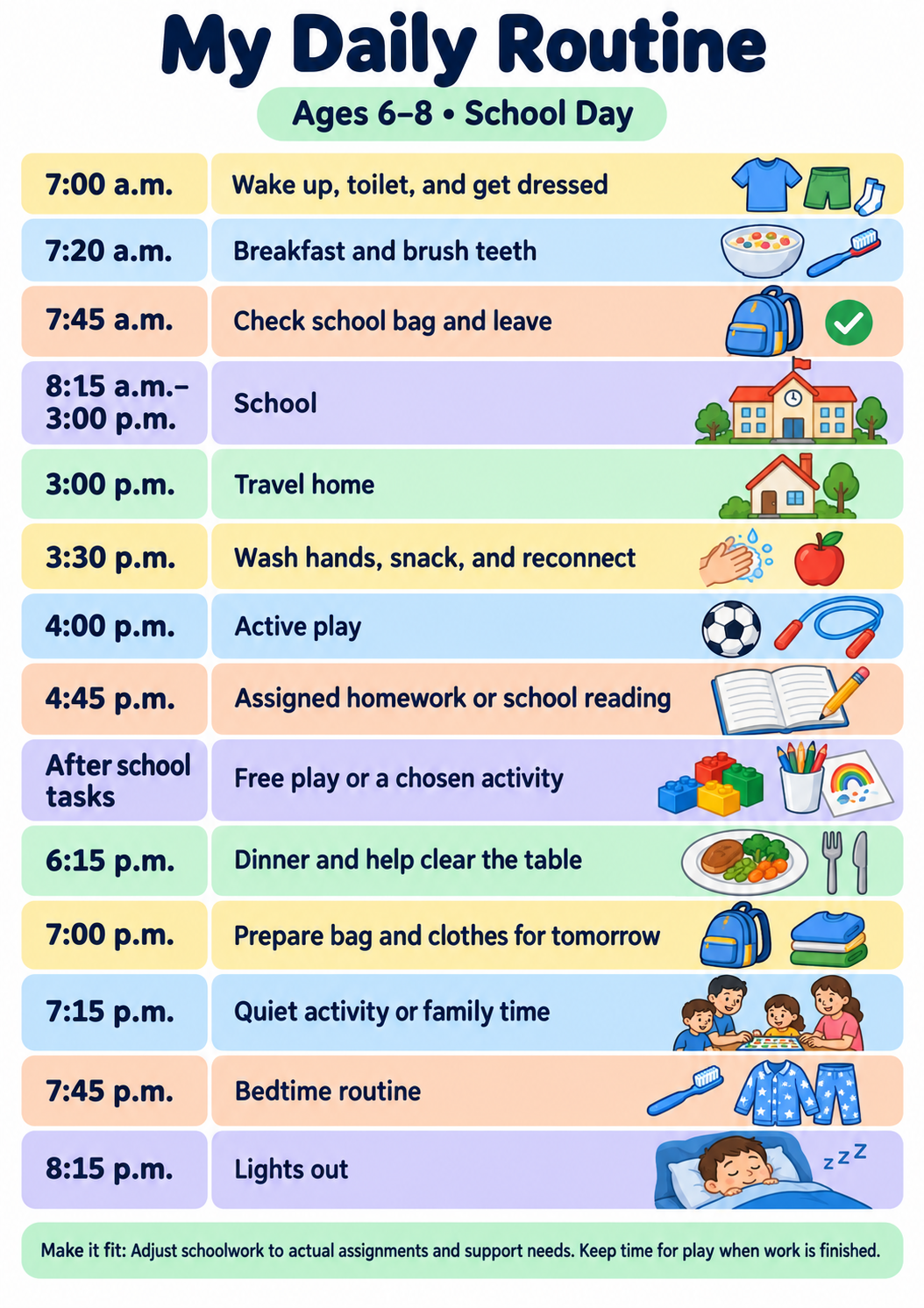
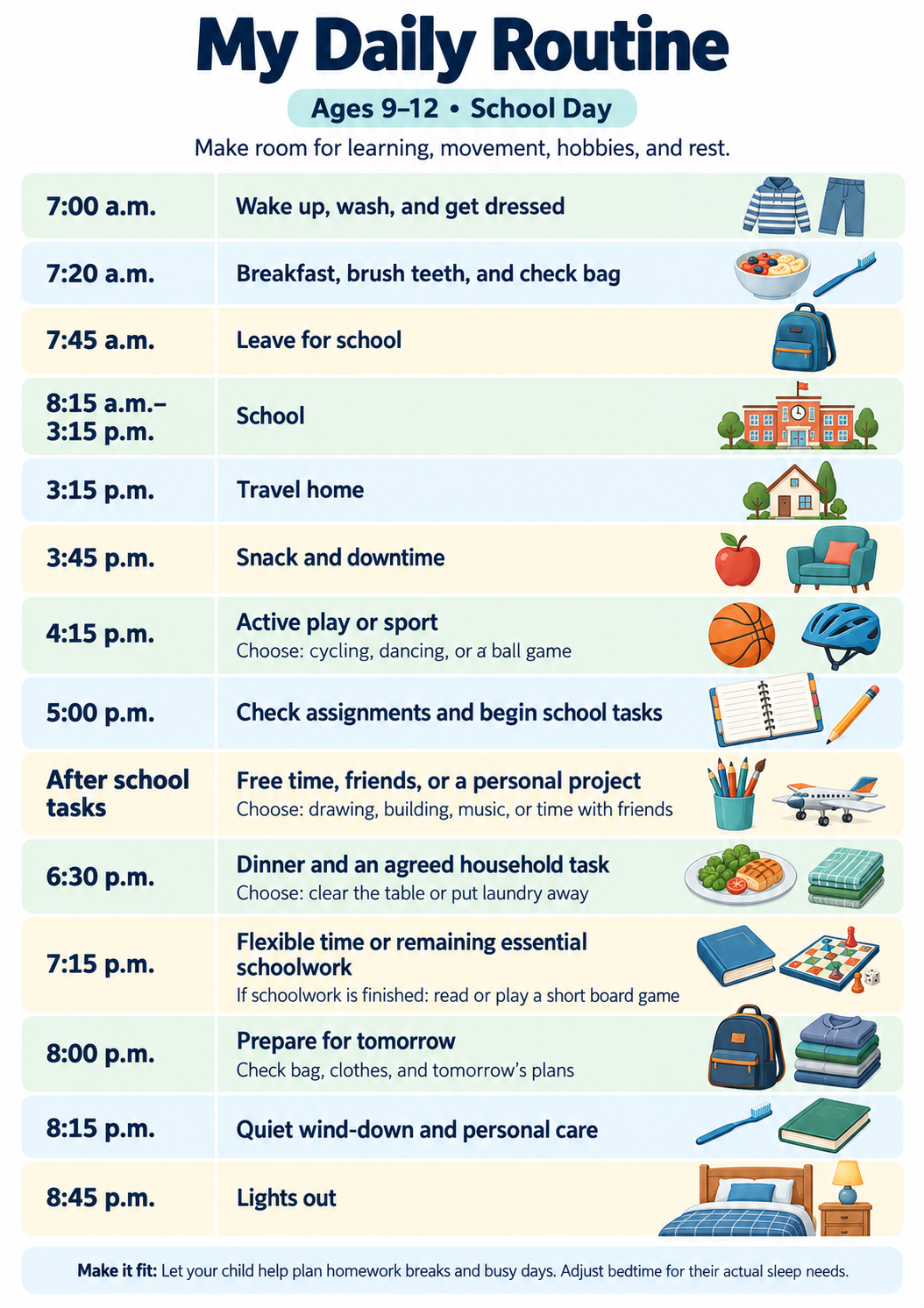
These sample schedules are starting points, not rules. Adjust the times for school, travel, sleep needs, and caregiver availability. Homework blocks are flexible, and movement includes activity at school as well as at home.
Ages 3–5: A Preschool Daily Routine
Ages 6–8: A School-Day Routine
Ages 9–12: A Daily Routine With More Independence
Start with the part of the day that needs the most support. Try the routine for a week, then ask your child what helps and what feels difficult. Keep useful steps, adjust unrealistic ones, and gradually hand over responsibilities as your child becomes ready.